
Inhalant Addiction Treatment
In recent years, drugs like heroin and fentanyl have dominated the headlines, and for good reason. However, there are other dangerous substances within arm’s reach that have led to what many call a “silent epidemic”: inhalants.
Inhalant drugs can be found in common household items like spray paint, rubber cement, and cleaning products. Used properly, these products are relatively harmless. But when intentionally inhaled, even first-time users are at risk for severe health consequences, including sudden death from what is known as ‘sudden sniffing death syndrome’ due to cardiac arrhythmias or asphyxia. They can cause serious bodily harm, addiction, and even death.
If you or a loved one may be struggling with inhalant abuse, professional drug rehab programs can help. Treating inhalant addiction requires a specialized approach due to the accessibility of inhalants in household items.

An inhalant is any substance that produces chemical vapors which, when inhaled, create a psychoactive effect. One of the most recognized terms for inhalant abuse is “sniffing glue,” but these toxic substances can be found in numerous household items.
Common slang terms used to refer to inhalants include:
- Air blast
- Bagging
- Bang
- Bolt or bullet bolt
- Dusting
- Glading
- Highball
- Huffing
- Poppers (nitrites)
- Snappers (nitrites)
- Whippets (nitrous oxide)
Part of the reason inhalants are so dangerous is their availability. Unlike street drugs like crack and heroin, anyone can walk into a hardware store and purchase inhalants. They are inexpensive and, for the most part, unregulated.
Inhalant use is a form of drug use that can lead to serious health consequences. Inhalants are often misunderstood because they are legal and easily accessible. However, repeated use can quickly lead to inhalant abuse and dependence, especially in adolescents and individuals seeking a fast, inexpensive high. Repeated inhalant abuse can result in inhalant use disorder, a diagnosable condition characterized by compulsive use despite harmful consequences.
What Forms Do Inhalants Come In?
- Volatile solvents: These are liquids that vaporize at room temperature. Examples include paint thinner, glue, gasoline, and correction fluid.
- Aerosols: These are sprays that contain propellants and solvents, such as spray paint, deodorant sprays, and hair sprays.
- Gases: These include medical anesthetics as well as household products like butane lighters, propane tanks, and lighter fluid.
- Nitrites: These are a special class of inhalants used primarily to enhance sexual experience rather than to achieve intoxication.
The classification of inhalants and their abuse is outlined in the Diagnostic and Statistical Manual of Mental Disorders.
An aerosol is a collection of suspended particles of liquid droplets. Aerosols are often enclosed under pressure in spray cans. They can be released in a fine spray by means of a propellant gas. Some users inhale fumes by placing substances inside a plastic bag, a method known as ‘bagging’, which concentrates the fumes and increases both the intensity and danger of inhalant effects.
They include the following products:
- Deodorant sprays
- Spray paint
- Fabric sprays
- Hair sprays
- Cooking sprays
- Air dusters (for electronics)
- Whip cream dispensers (whippets)
There are several types of gases that can be inhaled, including:
- Butane (from lighters)
- Chloroform
- Ether
- Halothane
- Propane
- Refrigerants
Nitrites are often abused for sexual enhancement or to get high. These include:
- Amyl nitrite
- Butyl nitrite
- Cyclohexyl nitrite
Volatile solvents are liquids that turn into vapor at room temperature. They include:
- Correction fluids (whiteout)
- Degreasers
- Dry-cleaning chemicals
- Felt markers
- Gasoline
- Glues
- Paint thinners and removers
There are no specific laboratory tests to confirm volatile solvent inhalation, so diagnosis relies on clinical history and presentation.
How Are Inhalants Abused?
Some users will pour or spray substances into a bag and inhale them (“bagging”), while others may huff directly from a container or spray products into their mouth or airway.
Who Takes Them?
Inhalant abuse is one of the most common forms of substance use among adolescents. According to national surveys, 21.7 million Americans aged 12 and older have used inhalants at least once.
However, adults also misuse inhalants, often as a substitute when other substances are unavailable or unaffordable. Inhalant abuse affects individuals across all socioeconomic backgrounds.
Because inhalants are inexpensive and widely available, they are often used as a gateway substance, particularly among teens.
Signs and Symptoms of Inhalant Abuse
Common signs of inhalant abuse include:
- Chemical odors on breath or clothing
- Paint or stains on face, hands, or clothing
- Slurred speech or disorientation
- Frequent headaches or nausea
- Hidden empty containers (spray cans, glue, etc.)
- Mood swings, irritability, or aggression
- Decline in school or work performance
- Social withdrawal or secrecy
Some neuropsychiatric symptoms, such as hallucinations or cognitive impairments, may mimic other mental disorders, making an accurate diagnosis important.
Over time, these symptoms may worsen as dependence develops, increasing the risk of serious health complications.
A Brief History of Inhalants

People have used inhalants since ancient times, often in religious or ceremonial practices. Ether and nitrous oxide were later discovered and used medically, but recreational use followed shortly after.
Inhalant abuse became more widespread in the mid-20th century and continues to be a global issue today. The American Psychiatric Association has established diagnostic criteria for inhalant-related disorders in its official manuals.
Consequences of Inhalant Misuse
Chronic effects of inhalant use can damage multiple organ systems, including the central nervous system, resulting in lasting neurological impairment such as memory loss, cognitive deficits, and motor skill difficulties.
It can be difficult to spot inhalant addiction early, but behavioral changes often emerge.
People who abuse inhalants regularly may become aggressive, irritable, or emotionally unstable. They may experience impaired judgment, lethargy, and difficulty concentrating.
Teens may lose interest in activities, isolate themselves, or act out of character.
Over time, chronic inhalant abuse can lead to long-term cognitive impairment and memory loss, especially short-term memory problems.
Most people report feeling euphoric and dizzy. Inhalants may also cause:
- Lack of coordination
- Slurred speech
- Giggling or disorientation
- Hallucinations
- Muscle weakness
Although these effects may only last a few minutes, the damage caused to vital organs can be long-lasting or irreversible.
When the high wears off, users may experience nausea, headaches, and dizziness.
Withdrawal symptoms may include:
- Cravings
- Anxiety and depression
- Sweating
- Insomnia
- Tremors
- Panic attacks
- Hallucinations or psychosis
Abusing inhalants may result in:
- Heart failure
- Tissue damage
- Suffocation
- Coma
These risks can occur even after a single use. Acute inhalant intoxication can lead to acute intoxication and life-threatening cardiac arrhythmias, such as ventricular fibrillation, which may result in sudden death. In some cases, individuals experience “sudden sniffing death syndrome,” which can be fatal without warning.
Long-term inhalant abuse can lead to serious complications, including:
- Hearing loss
- Vision loss
- Brain damage
- Heart problems
- Kidney or liver damage
- Oxygen deprivation
- Bone marrow damage
Repeated exposure to toxic chemicals can permanently impact brain function and overall quality of life. Over time, compulsive use of inhalants can develop, resulting in persistent health and behavioral problems.
Using Inhalants With Other Drugs

Combining inhalants with other substances significantly increases the risk of overdose and death. Using inhalants alongside other drugs also raises the likelihood of developing a substance use disorder, a medical diagnosis characterized by compulsive substance use patterns.
They are commonly used with alcohol, marijuana, stimulants, and depressants, or as a substitute when other drugs are unavailable.
Medical Care for Inhalant Addiction
Support groups can also play a vital role in recovery, offering encouragement and guidance as individuals work toward lasting sobriety. In severe cases, hospitalization may be necessary to stabilize the patient and provide intensive medical care. Ultimately, comprehensive medical care ensures that all aspects of inhalant addiction are addressed, helping individuals regain their health and rebuild their lives.
Getting Treatment for Inhalant Addiction
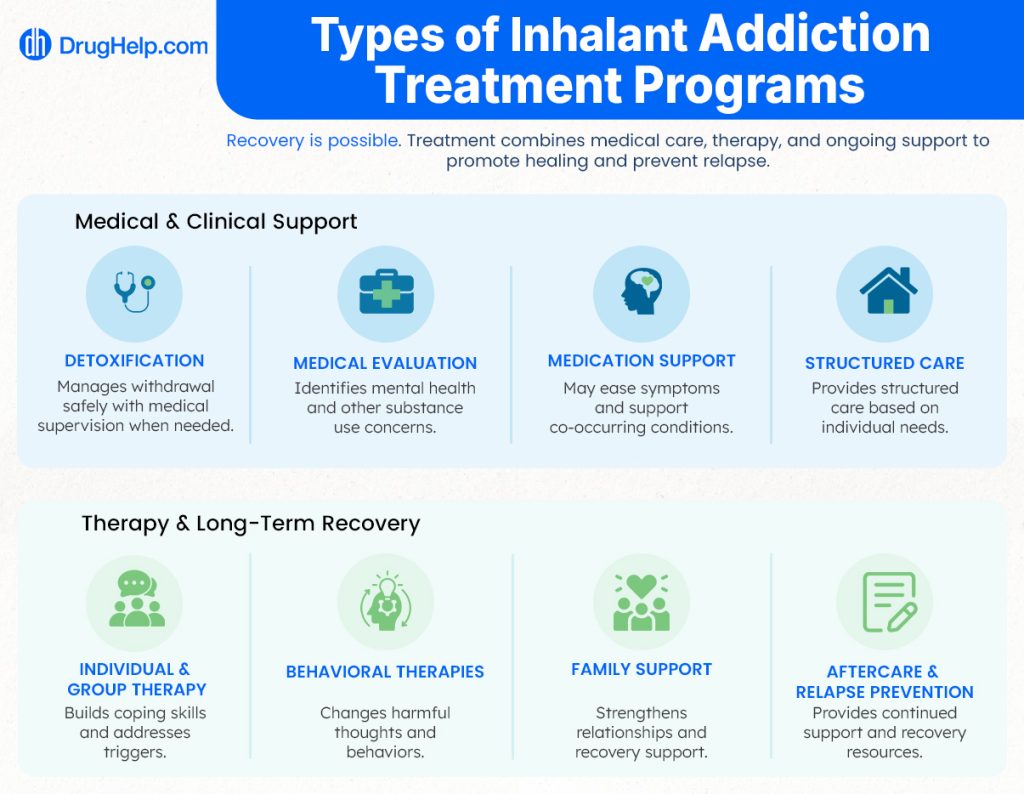
Recovering from inhalant addiction requires comprehensive, professional care. Treating inhalant abuse requires a comprehensive and specialized approach, as inhalants can damage both the body and brain, so treatment must address the whole person.
Effective inhalant addiction treatment programs may include:
Medical Detox: Supervised detox is often the first step in overcoming inhalant addiction, helping to eliminate harmful substances from the body and manage inhalant withdrawal symptoms in a controlled setting. Inhalant withdrawal and inhalant dependence are less common than with other substances, but may include psychological and sleep disturbances. There are no FDA-approved medications or reversal agents specifically for inhalant addiction or overdose, so treatment relies on supportive care.
Inpatient Rehab Programs: Residential treatment provides a structured, 24/7 substance-free environment, which is crucial for severe cases or unstable home environments, allowing individuals to focus fully on recovery.
Behavioral Therapies: Therapies like Cognitive Behavioral Therapy (CBT) help individuals identify triggers, change harmful thought patterns, and develop healthier coping skills. Therapy focuses on motivating change, addressing trauma, and supporting the development of social skills. Yoga and meditation can also aid in reducing stress and promoting emotional stability during recovery.
Dual Diagnosis Treatment: Many individuals struggling with inhalant abuse also face mental health conditions such as anxiety or depression. Treating these co-occurring conditions simultaneously improves long-term outcomes. Substance abuse and mental health are closely linked, and mental health services can provide support for both issues.
Family Therapy and Support: Involving loved ones in the recovery process through family therapy can strengthen relationships and support lasting change.
Aftercare and Relapse Prevention: Ongoing aftercare support through outpatient care, counseling, and support groups helps individuals maintain sobriety and rebuild their lives. Relapse rates are high in inhalant addiction, so ongoing support is essential.
If you or a loved one is struggling, seek help from a healthcare provider or mental health services for diagnosis and treatment planning. The Mental Health Services Administration is an authoritative source for information and statistics on inhalant use. SAMHSA’s National Helpline provides treatment referral and information services for individuals and families.
Holistic Approaches to Recovery
In addition, holistic programs often include life skills training, family therapy, and individual counseling to address the underlying causes of inhalant abuse and build a strong foundation for long-term wellness. By focusing on overall well-being and teaching healthy coping strategies, holistic approaches empower individuals to prevent relapse and maintain a substance-free lifestyle. This comprehensive support helps those recovering from inhalant addiction develop the confidence and skills needed for a healthier, more fulfilling future.
Support Groups and Community
Family and friends also play a crucial role by offering emotional support and helping to create a substance-free environment at home. By connecting with others who understand the challenges of inhalant addiction, individuals can find more support, reduce the risk of relapse, and build a strong network for lasting recovery.
Get Help
Get Help for Inhalant Addiction Today
Family physicians can play a key role in recognizing inhalant abuse and guiding individuals and families to appropriate treatment resources. If you or a loved one is struggling with inhalant abuse, seeking professional help can make all the difference. With the right treatment and support, recovery is possible—and it can start today.
Frequently Asked Questions About Inhalant Abuse and Treatment
Have more questions?
Get help today
Inhalant abuse occurs when someone intentionally breathes in chemical vapors from household, industrial, or medical products to get high. Common inhalants include spray paint, glue, air dusters, gasoline, nitrous oxide, and certain cleaning products.
Yes, inhalants can be addictive. Repeated inhalant abuse can lead to cravings, tolerance, dependence, and withdrawal symptoms. Professional inhalant addiction treatment can help individuals stop using safely and begin recovery.
Short-term effects of inhalant abuse may include dizziness, slurred speech, poor coordination, nausea, headaches, hallucinations, suffocation, coma, or sudden death.
Long-term inhalant abuse can cause brain damage, hearing loss, vision loss, heart problems, liver damage, kidney damage, and bone marrow damage.
Sudden sniffing death syndrome refers to fatal heart failure that can occur after inhalant use—even after a single episode. This is one reason inhalant abuse is considered extremely dangerous and requires immediate attention.
Inhalant addiction treatment may include medical detox, inpatient rehab, behavioral therapy, dual diagnosis treatment, family therapy, relapse prevention, and aftercare planning. Treatment helps address withdrawal symptoms, underlying mental health concerns, triggers, and the physical effects of inhalant abuse.
Many people benefit from rehab for inhalant abuse, especially if they experience cravings, withdrawal symptoms, repeated use, co-occurring mental health concerns, or signs of physical harm. Drug rehab programs provide structure, medical support, therapy, and relapse prevention tools to support long-term recovery.

Jessica Granata is a board-certified Family and Psychiatric Mental Health Nurse Practitioner in Palm Beach County, FL. She has served as a Nursing faculty member, teaching courses at both the graduate and undergraduate levels, and has been a preceptor, training numerous Nurse Practitioner and Physician Assistant students from several universities. She has 20 years of experience working in mental health and substance abuse treatment.